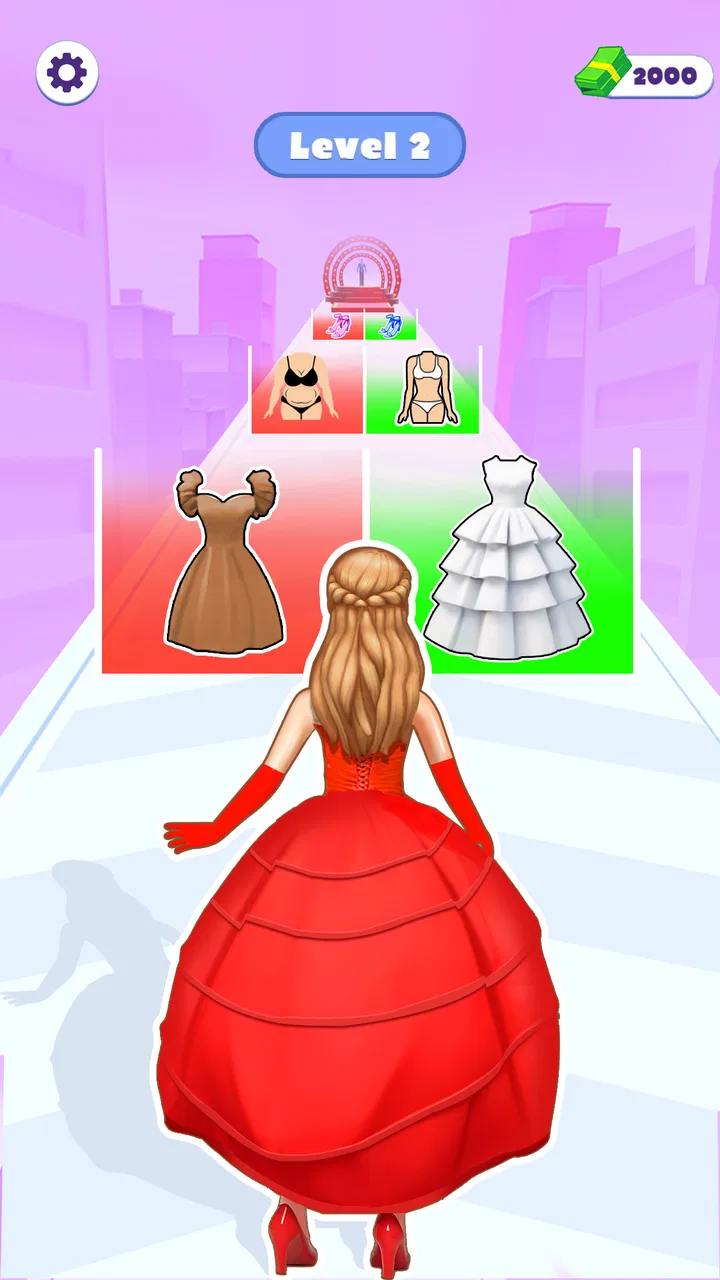
Build a Doll
- 4.4
- Rating
- 10.00M
- Installs
- Free
- Price

 Analysis by App-foxy
Build a Doll caught my attention because it turns a familiar dress-up idea into a sequence of small styling decisions. I choose clothing, work through makeup choices, and try to create a doll that looks polished enough to feel like a queen. After spending time with it, I see the appeal clearly: it is an easygoing casual game for short sessions, especially when I want something visual and undemanding rather than a complicated challenge.
The important question is whether that first burst of creativity lasts. My experience is mixed in a useful way. Build a Doll is strongest as a quick styling game that gives me a simple goal and immediate visual feedback. It is less convincing as a deep fashion simulator or a game I would play continuously for long periods. That distinction matters if you are deciding whether it deserves a regular place on your phone.
What the first week feels like
The opening experience is easy to understand. I do not need a tutorial-heavy explanation to grasp the basic rhythm: make choices for the doll, combine the look, and aim for a queen-like result. The store summary describes that central idea directly, and the game stays focused on it instead of burying the dress-up activity under a complicated story or demanding controls.
You May Also Like

 Blood Strike: 2.5 Anniversary
Blood Strike’s Loadouts Turn Every Drop Into a Tactical Gamble
A close look at Blood Strike’s custom loadouts: how fast access to signature weapons reshapes its battle royale rhythm, rewards preparation, and narrows the gap between fights.

 Pandora - Music & Podcasts
Pandora’s Music Is Easy to Start, but Harder to Recover
Pandora’s strength is its low-effort path from a seed to a station. Its weak spot is how much confidence it asks you to place in connection, setup, and quiet recovery.

 8 Ball Pool
 Is Built on Rivalries, Rematches, and Routine
A close look at the rivalries, rematches, shared routines, and unanswered safety questions that turn a quick pool match into a persistent mobile community.

 Samsung Music
’s Quiet Strength Is Playing What You Already Own
Its reach comes less from spectacle than from dependable access to a personal library. That simplicity is both the app’s strongest retention engine and its ceiling.

 AccuWeather: Weather Radar
AccuWeather Review: A Quick, Clear Forecast for Everyday Decisions
For everyday plans, the best forecast is the one you can understand quickly. AccuWeather makes rain timing, radar, and local conditions easy to act on, with a few trade-offs.

 Hill Climb Racing
Why Hill Climb Racing Still Turns Crashes Into One More Run
A tiny car, a bumpy hill and one more upgrade: Hill Climb Racing keeps resurfacing because its simple chaos makes every near-miss feel personal.
More From Our News Desk



That simplicity is a genuine strength during the first few days. I can open the game while waiting for an appointment, play briefly during a coffee break, or finish a styling attempt before switching to something else. The short-session design makes it approachable for players who enjoy casual dress-up games but do not want a large character-creation system that takes time to learn.
My first useful tip is to avoid treating every choice as an isolated item. I get better-looking results when I think about the entire outfit as one composition. A dramatic dress can need quieter makeup, while a simpler outfit may benefit from a stronger face style. Even when the game presents choices one at a time, I find it more satisfying to keep a broad visual plan in mind instead of selecting whatever looks most attractive on its own.
The queen theme also gives the activity a clearer direction than an entirely open-ended wardrobe. I am not simply dressing a character without a target; I am trying to create a finished image with a particular sense of importance. That framing helps the early sessions feel purposeful. It is a small difference, but it stops the game from feeling like a blank closet where every choice has equal weight.
At the same time, the first-week appeal depends heavily on whether you enjoy visual experimentation. Players who like comparing colors, silhouettes, and makeup combinations will probably find the loop pleasant. Someone looking for action, puzzles, competition, or a strong narrative may find it too light. The game does not need to be more complicated to work, but its narrow focus is obvious from the beginning.
Build a Doll is free to start, which makes trying it straightforward. The content rating is Everyone 10+, so it sits comfortably in the family-friendly end of casual mobile gaming, while still being aimed at an audience that can appreciate the styling theme. Optional purchases are listed at $0.99 per item. I would keep that in mind before becoming attached to every available option, because a free entry point can feel different once a player starts wanting more variety.
The visual reward is another reason the first sessions work. A styling game needs the final doll to feel like a result rather than just a collection of taps. I pay more attention when the completed look feels coherent, and I am more willing to replay when I believe a different combination could produce a noticeably different impression. The best early sessions come from that small creative experiment: make one choice, notice its effect, then adjust the next decision around it.
Who gets the most from the opening loop
I would recommend the first-week experience to players who want a calm game with a clear visual objective. It is also a reasonable choice for younger players within the age guidance who enjoy fashion and makeup themes. The controls and premise are approachable enough for casual use, and there is no need to commit to a long play session to understand what the game is asking me to do.
It is less suitable if you need a strong sense of progression immediately. Traditional fashion alternatives often add character stories, themed collections, social voting, or more elaborate customization. Those systems can create stronger long-term goals, while Build a Doll keeps the emphasis on making the right styling choices for the doll in front of me. I prefer its lighter approach when I want relaxation, but I would choose a deeper alternative when I want a hobby game with many layers to manage.
What remains after the novelty fades
After the initial curiosity wears off, the value of Build a Doll depends on how often the basic decision loop still feels fresh. In my case, it works best when I use it as a small creative break rather than expecting it to become my main game. The pleasure comes from making a complete look, seeing whether the choices work together, and then trying again with a different attitude.
A realistic everyday use case is a short evening routine. I might play a few rounds after finishing work, not because I need to reach a major milestone, but because styling a character gives my attention somewhere gentle to go. The game fits that moment better than a competitive title that demands focus or a story game that punishes interruptions. If your phone time is made up of small gaps, this compact format can be more useful than a larger game with longer sessions.
For month-to-month use, I would create personal themes rather than repeating the same approach. One session can focus on a formal royal look, another on a softer appearance, and another on making the makeup the main feature. This is not a built-in progression system; it is a way I keep my own decisions from becoming automatic. The game gives me the canvas, but I have to supply some of the variety.
That leads to a less obvious trade-off. The more freedom I bring to the styling process, the longer the game stays interesting. If I simply choose the most eye-catching item every time, the experience becomes predictable much faster. If I deliberately build around balance, contrast, or restraint, each round gives me a small design problem. Players who enjoy that self-imposed challenge may keep returning longer than players who want the game to provide every goal for them.
The audience size suggests that the concept has broad appeal: Build a Doll has passed 10 million installs and holds a 4.3 average from around 84 thousand ratings. Those figures make it clear that this is not an obscure experiment, but popularity should not be confused with depth. A large audience can confirm that the premise is accessible; it cannot guarantee that the loop will remain engaging for every player over several months.
The current version is 0.9.0, and the game runs on Android 6.0 or later. That makes it reachable for many Android users, including people who are not using a recent phone. Still, I would judge the experience on the device I plan to use rather than assume that broad compatibility means identical comfort everywhere. Dress-up games depend on visuals, so screen size, responsiveness, and how clearly I can compare details affect enjoyment more than they would in a text-based casual game.
How it compares with familiar alternatives
Compared with a traditional makeover game, Build a Doll feels more focused. A larger makeover title may offer hair, outfits, cosmetics, room decoration, characters, and story tasks all at once. That variety can be rewarding, but it can also make the player spend more time managing menus than making a look. I appreciate that Build a Doll keeps the central fantasy easy to reach.
Compared with a highly competitive fashion game, it is also less stressful. I am not approaching each outfit as a public contest or worrying about a complicated ranking structure. That makes it better for unwinding, but it removes one of the strongest reasons people return to competitive alternatives. If you need external goals, social comparison, or a constant stream of achievements, another game in the category may provide a stronger habit.
Compared with a fully open doll creator, the queen objective gives Build a Doll more direction but potentially less room for personal interpretation. I like having a target because it prevents indecision. On the other hand, players who want to design unusual characters that ignore conventional glamour may find the intended style limiting. The right choice depends on whether you want guidance or complete creative control.
One practical workflow helps me get more from it: I decide the mood before touching the individual options. I ask myself whether the doll should look elegant, bold, soft, or dramatic, then choose items that support that mood. This prevents the common problem of ending with a collection of attractive pieces that do not belong together. It also makes replay more deliberate, because I can compare the result of different moods instead of merely swapping random items.
Maintenance, friction, and reasons to stop playing
The maintenance burden is low in the sense that the game does not require a complicated daily routine from me. I can return after a break and understand the basic activity immediately. That is valuable for a casual title: missing several days does not make me feel lost, and I do not need to remember a large number of systems before enjoying another styling session.
However, low maintenance can also mean low urgency. There is a difference between a game that is easy to resume and one that gives me a compelling reason to return. Build a Doll is easy to resume because the premise is clear, but its long-term pull depends on whether I still want to create another look. Once the novelty of the queen transformation becomes familiar, the game needs my own imagination to keep the routine alive.
The main source of fatigue is repetition. Dress-up decisions can feel satisfying for a while, but the emotional payoff becomes smaller if each session follows the same pattern and the final result does not feel meaningfully different. I notice this most when I play too many rounds in one sitting. What feels relaxing at the start can turn into a sequence of similar selections, so I prefer short visits with a clear stopping point.
Another friction point is the possibility of purchase pressure. The game is free, and the listed in-app purchases cost $0.99 per item, but even small individual prices can add up if I begin chasing every appealing option. My advice is to decide early whether you are comfortable treating purchases as occasional extras. If you need the entire experience to remain completely free, pay attention to how much enjoyment you get from the accessible choices before investing time in a collection mindset.
This is also where the game may not be right for children who need a completely hands-off experience with no temptation to spend. The age guidance is Everyone 10+, but an age rating is not a substitute for a household decision about purchases. I would set expectations clearly and, where appropriate, use device-level purchase protections. That is sensible for any free mobile game with optional paid items, especially one built around collecting attractive visual choices.
The developer, Fried Chicken Games, has chosen a concept that is easy to communicate, but that clarity leaves little room to hide weaknesses. In a story game, a slow section may be balanced by characters or plot. Here, the styling loop is the product. If the available decisions feel repetitive to me, there is no separate adventure to carry the session. That is not a criticism of the concept itself; it is a reminder that focused games need their central activity to remain satisfying.
I also would not install it expecting a serious makeup lesson. The makeup choices are part of the visual play, not a replacement for professional guidance or a detailed beauty simulator. Likewise, I would not choose it as a fashion-planning tool for real outfits. Its value is playful experimentation, and it works best when I judge the doll’s appearance by the mood I want rather than by practical wardrobe rules.
A useful stopping rule improves the experience. I stop when I have completed a look that feels intentional instead of continuing until the choices become automatic. This preserves the sense that each session had a small creative finish. It is a simple habit, but it matters because the game’s long-term value is more vulnerable to overplaying than to underplaying.
My long-term verdict
After the first-week excitement fades, Build a Doll earns a place on my phone as a lightweight creative break, not as an endlessly deep casual game. I like its clear premise, its approachable styling decisions, and the way the queen theme gives each outfit a destination. The game is especially comfortable when I have only a few minutes and want something visual that I can pause without losing a complicated chain of progress.
I would recommend it to someone who enjoys doll dress-up, makeup combinations, and relaxed sessions. It is a good fit for players who prefer guided creativity over complex management, and for families looking for a casual game within the Everyone 10+ rating. The free starting point makes it easy to test whether the styling loop suits you before deciding whether any optional item is worth buying.
I would skip it if I need deep customization, a substantial story, competitive fashion events, or a progression system that constantly supplies new goals. A larger makeover game will probably serve you better in those cases. I would also skip it if repetitive visual choices quickly lose their charm, because the game does not disguise its central loop with unrelated mechanics.
My final recommendation is to approach it as a small, repeatable pastime. Play with a theme, compare complete looks rather than isolated items, and take breaks before the decisions become mechanical. With that mindset, the game has recurring value because it is easy to revisit and easy to fit into ordinary days. Without that personal variety, the novelty can fade quickly.
Build a Doll does not need to become a permanent main game to be worthwhile. Its lasting strength is convenience: I can return whenever I want a short styling task, make a few choices, and leave with a finished visual result. That is a modest promise, but it delivers it more honestly than games that pretend a simple dress-up loop will provide endless depth.
FAQs for Build a Doll
01What is Build a Doll and how does it work?
Build a Doll is a creative app that allows users to design and customize their own virtual dolls. Users can choose from a variety of hairstyles, outfits, and accessories to create unique characters. The app provides an intuitive interface with drag-and-drop features, making it easy for users of all ages to enjoy the experience.
02Is Build a Doll available for both Android and iOS devices?
Yes, Build a Doll is available for download on both Android and iOS platforms. You can find it on the Google Play Store for Android devices and the Apple App Store for iOS devices. Ensure your device meets the app's minimum system requirements for optimal performance.
03Does Build a Doll offer in-app purchases or ads?
Build a Doll is a freemium app, meaning it is free to download but may offer in-app purchases. These purchases can include additional outfits, accessories, or exclusive content. The app may also display ads, but users can usually opt for an ad-free experience by purchasing a premium version.
04Can I share my creations from Build a Doll with friends?
Yes, Build a Doll allows users to share their customized dolls with friends through social media platforms or messaging apps. The app provides easy sharing options, so you can showcase your creations with just a few taps. Make sure your app permissions allow access to these sharing features.
05Is Build a Doll suitable for children?
Build a Doll is designed to be family-friendly and is suitable for children. It offers a safe and engaging environment for kids to express their creativity. Parents should review the app’s content and in-app purchase options to ensure it aligns with their preferences and age-appropriate guidelines.
Pros
- Highly customizable doll options.
- Intuitive and user-friendly interface.
- Great for creative expression.
- Frequent updates with new content.
- No intrusive ads during gameplay.
Cons
- Limited free assets available.
- Occasional app crashes reported.
- Some features require in-app purchases.
- Animation options are limited.
- No offline mode available.

Build a Doll
Gallery